Gallery Bolivia

North Bolivia


South Bolivia

Click on one picture to view the whole gallery

12.10.2007

Three days of “vacation” in Copacabana

We have been traveling for 11 weeks in South America so far. We visited 3 countries and spent one or more nights in 45 different places … Especially in Venezuela & Peru the rhythm of our travel was really challenging. So we needed a little rest and therefore chose to treat us to a few days of “vacation” in the famous Hostal La Cúpula in Copacabana, Bolivia, before continuing our trip. This place is truly heavenly, located a five minutes walk from the center of the small city of Copacabana, on a hill overlooking Lake Titicaca. It...[more]

Category: Bolivia

13.10.2007

Two days on Isla del Sol

Eventually we decided to interrupt our short vacation in Copacabana / Bolivia, take a boat to Isla del Sol and trek the island from north to south. After a two hour boat trip from Copacabana, we got off in Cha’llapampa at the northern tip of the island and asked a local guide to show us the sights of that area. This included the Pre-Inca ruins of Chincana, the Mesa Ceremonial, which was used for sacrifices but where now a local “Shaman” treats people, and Titi Khar’ka or Rock of the Puma, which gave the lake its name. With the help...[more]

Category: Bolivia

14.10.2007

Pecularities of Copacabana

There are a few peculiarities that we observed in Copacabana, but nowhere else! Every day, but especially on Sunday, cars, taxis, busses, etc … line up in front of the gigantic Cathedral to receive a blessing by the priest, which should keep both car and driver safe from accidents. People actually come from far away to receive this “Benedicion de Movilidades”, or as an American tourist put it, “car bless day”. This ceremony is quite a spectacle. First, the vehicle is thoroughly washed and then decorated with real flowers, plastic...[more]

Category: Bolivia

16.10.2007

Arriving in La Paz being greeted by the police

From Copacabana we took a public bus to La Paz, the “tourist bus” would have been only slightly more expensive, but it only leaves in the afternoon, whereas the public busses leave every hour. Our bus was a bit ancient and not suitable for tall people. There were only five tourists on our bus, but the tallest was sitting behind Heidi and she was in touch with his knees for the entire trip! We approached the city by first going through El Alto, when suddenly the bus crossed the edge of the plateau and started winding down the road to...[more]

Category: Bolivia

17.10.2007

We almost made it to Rurrenabaque!

Today, October 17th, we happily boarded a tiny plane that would take us into the warmth of Bolivia’s Amazon Basin. Taking off from La Paz El Alto International Airport at 4.050 meters added to our excitement, but soon turned into a nerve racking journey. Due to bad weather the 40 minute trip to Rurrenabaque was more like a roller coaster ride. Heidi felt as if she had stopped breathing and stared at her watch counting the minutes to finally touch down. As soon as we approached the tiny airport, the captain announced that we could...[more]

Category: Bolivia

18.10.2007

Welcome to the Jungle

October 18th, after numerous phone calls to the airline and hours waiting at the airport we made it! AmasZonas flight 90 eventually took off and what is more important touched down on the dusty / grassy runway in Rurrenabaque, with no less than a 25 hour delay … On our second flight the weather was just fine and we were able to watch the Cordillera Real and its many snow-capped mountains of more than 6.000 meters high, while our plane was climbing. Then the scenery abruptly changed with the Yungas highlands down below and finally...[more]

Category: Bolivia

21.10.2007

4 days in Madidi National Park

Madidi National Park is located in the western part of Bolivia’s Amazon Basin and is one of South America’s most intact ecosystems. It covers an area of 1.8 million hectares and was only created 12 years ago. Presently only 8.000 people visit the park per year. The area of the park itself ranges from mountains 6.000 meters high to the Amazon lowlands, making it South America’s most diverse wilderness gems with a huge variety of fauna and flora. Sustainable ethno- & ecotourism is the philosophy here and of what we observed so far it...[more]

Category: Bolivia

22.10.2007

Deep inside the Rain Forest

When coming to explore the “Selva” or Rain Forest, do not expect to see many animals, for that you need to go to the “Pampa”. In the forest, you might get to see a few monkeys, wild boars, birds, but do not expect jaguars or tapirs crossing your path. However, the lack of seeing animals is greatly compensated by what you hear around you. Some birds or insect can sound like a dentist’s drill or a chain saw. Wild bore can be heard rampaging through the forest from far away and the smell that should keep away their potential predators...[more]

Category: Bolivia

25.10.2007

A few days in the Pampa

The Amazon Basin around Rurrenabaque is divided into two distinct zones: the “Selva” or Rain Forest of Madidi National Park, and the Municipal Reserve of the Pampa of the River Yacuma, a large, flat area of swamps along this river which is used for the excursions by boat. Most tourists head for the “Pampa”, because that is THE place to see animals: lots of different birds of course, Capybaras, Caimans, many kinds of Monkeys, Turtles and if you are lucky, Anacondas. After our very positive experience in the Madidi National Park we...[more]

Category: Bolivia

26.10.2007

Capybaras, Caimans, Monkeys and others …

Visiting the Pampa here is done by boat, and you get to see a very diversified fauna: Capybaras, Caimans large and small, many kinds of Monkeys, Turtles, a huge variety of Birds and with some luck Anacondas. The one animal you want to avoid are the mosquitoes - millions of them attack at random, you may spend a whole afternoon without being bothered and the next morning can be hell; nothing helps, repellents, long sleeves, we did it all, and despite we are both covered by terribly itching bites of all sizes. During our stay we did...[more]

Category: Bolivia

27.10.2007

La Paz - The highest capital

High, higher, the highest! - La Paz is definitely the city of superlatives when it comes to height, also in terms of difference in altitude within the very city. The city’s wealthy neighborhoods are located in the lowlands, at 3.200 meters, its very center at 3.660m and El Alto, at 4.050m, which makes it the highest capital of the world. In most cities the fancy hoods are higher up whereas the cheap quarters are down under. Why is this reversed in La Paz? If you ever felt the difference in temperature of 800 meters at that altitude,...[more]

Category: Bolivia

28.10.2007

The highest international airport in the world

This chapter is aimed at persons who are VERY interested in traveling by plane or flying planes. Only if this is the case, read on ... Flying in South America is something really special, we will soon explain why. But without any doubt, the climax is La Paz El Alto (IATA: LPB / ICAO: SLLP), the highest international airport and the second highest commercial airport in the world at 13.325 feet or 4.061 meters (the highest one is "Qamdo Bangda" in Tibet at 14.219 feet or 4.334 meters, but is hardly known). At this high altitude, the...[more]

Category: Bolivia

29.10.2007

Spending a Sunday in El Alto

With high expectations, we went up to El Alto Sunday morning to visit the weekly “16 de Julio Mercado”. It must be the biggest market we have ever been to, since it seemed as if all of El Alto had turned into a huge market. Though the products for sale were not very attractive for us, you could actually find anything from white mice, building material, second hand clothes, food, DVDs for 0.4 Euros and what not ... There were masses of people moving every which way and soon we became tired of being shoved around. We were the only...[more]

Category: Bolivia

30.10.2007

“Death Road” - The world most dangerous road

Most people may have heard of this road which starts in La Paz descending 3.450 meters down into the Yungas, within only 64km. Only until you see it for yourself, does the name “Death Road” sound extreme. It is an unpaved gravel road that was wedged out of the mountain in the 1930s by Paraguayan prisoners of war. Nobody knows how many died during the construction, but statistics for more recent time are available. Every year about 200 - 300 died on this short stretch. In one year about 25 vehicles fell off the road, making it one...[more]

Category: Bolivia

31.10.2007

Biking down “Death Road”

This trip down the mountain was one of the most memorable experiences of our trip so far. It was simply fantastic, like a great dinner, you do not want it to end! About ten years ago a company in La Paz started offering biking down this road in the midst of all the traffic chaos and dust, which added a few more fatal accidents with bikers falling off the cliffs or hitting trucks. There again, the exact number of casualties is unknown and varies from 8 people in 2006 to 15 people over 5 years. You can see many memorials along the...[more]

Category: Bolivia

01.11.2007

Yungas - The land of coffee and coca plantations

The Yungas is an area north of La Paz which is best described as the transition zone between the dry Altiplano and the humid Amazon Basin. Coroico, a small sleepy village, is one of the major settlements in the region. We got a first glimpse of this village perched on the mountain slope with amazing scenery all around when biking down “Death Road”. We knew then that this was a place where we wanted to chill out for a few days. Not that we were tired, but we were worried that moving constantly within a range of 4.400 meters of...[more]

Category: Bolivia

04.11.2007

Going from Coroico to Sucre

We left Coroico on November 2nd, “El Dia de Los Muertos”, just in time, because the same morning wealthy Bolivians from La Paz descended on this lovely village chocking its narrow streets with their big SUVs and completely booking up all nice hotels. For the trip back to La Paz we ended up in the most banged up, worn down minibus to be. Nevertheless we made it, but what followed that afternoon was failure after failure. First we could not get a “Buscama” to Sucre, but only a “semi-cama”, far less comfortable and without toilets for...[more]

Category: Bolivia

06.11.2007

First steps in Sucre

The morning we arrived, we immediately set out to explore our new “home town” since we plan to stay here for one week. Well, we found ourselves in a place worlds apart from what we have seen so far of Bolivia. The city itself is beautiful with lots of bright white colonial architecture. It is so obvious that this place is much wealthier than other parts of Bolivia we have visited. People dress differently, you see a lot less women in their traditional clothes here and the population is mostly Hispanics, a lot less “Indigenios” than...[more]

Category: Bolivia

07.11.2007

In the midst of Bolivian politics: Sucre, “Capital Plena”

Presently there are daily demonstrations here in Sucre. Every single day there has been some kind of event on the main square, Plaza 25 de Mayo, mainly students or school groups participating. In the beginning of September students and police forces were fighting all night long on the main square … But violent demonstrations seem be an absolute exception. What we have witnessed so far was actually something in between informative events and small carnivals parades, with students or young professionals in various costumes dancing in...[more]

Category: Bolivia

09.11.2007

A very different week

It has been a major change for us to settle down a bit and to live a more normal life, not packing our backpacks every other day or even worst, every day! Heidi decided to take Spanish lessons here, a popular thing to do in Sucre. You find students from all over the world enjoying this beautiful colonial city, its moderate climate and prices unknown anywhere else: the going rate at a reputable language institute is 6 USD an hour for a private class. Heidi spends four hours every afternoon practicing Spanish. There are often evening...[more]

Category: Bolivia

10.11.2007

Let’s change everything …

Maybe not entirely, but …..Until two weeks ago, we perfectly stuck to our travel plans, spent less than what we had budgeted, in a word we were on track. Something very unusual when traveling “Round The World”. Then … Then we arrived in Bolivia! Fell in love with this country, we really did! Decided we needed more time to enjoy our travel here and finally threw our itinerary over board!!! Actually we guessed it would happen and even were a bit afraid of it, but we are completely enthusiastic about it now. So what is new? Well, a...[more]

Category: Bolivia

12.11.2007

Sunday market in Tarabuco

Tarabuco is a village about 65 kilometers from Sucre, known for its highly developed weaving techniques and quality textiles and especially for its very genuine "Indigenous" Sunday market. We decided to book a tour, which actually was only a bus provided to take the “Gringos” the 1.5 hour from Sucre to Tarabuco and back for 25 Bolivianos or 3.2 USD. We went there with low expectations, especially after what we had experienced at the Sunday market in Pisac, Peru, which was packed with busloads of tourists. Well, Tarabuco is touristy...[more]

Category: Bolivia

13.11.2007

Gilles - Tough trip from Sucre to Tupiza …

Immediately after returning from Tarabuco in the afternoon, I left Heidi to her Spanish class and started out for my journey to Tupiza, in the very scenic south of Bolivia. Since I first had to go to Potosi and from there take a night bus to Tupiza, I was in a bit of a rush. It was Sunday, a popular travel day, so I was worried not get a place on the more comfortable "Buscamas" ... And for a night ride I did not really feel like taking a "Servicio Economico", which offers a very Spartan level of comfort! Since the next bus to...[more]

Category: Bolivia

14.11.2007

Gilles - Astonishing surrounding countryside of Tupiza

Tupiza is a small and rural town mainly living from agriculture and mining. Tourism is only a very recent phenomenon: the first tourism agency here, the highly recommendable Tupiza Tours, opened 12 years ago and has remained without competition until 3 to 4 years ago. Now the number of tourists is increasing very fast, partly because of the astonishing countryside around this town. Another important reason is that travel agencies here offer much more reliable tours to the Salar de Uyuni than the ones in Uyuni, where problems have...[more]

Category: Bolivia

16.11.2007

Gilles - Four days on the Southwest Circuit

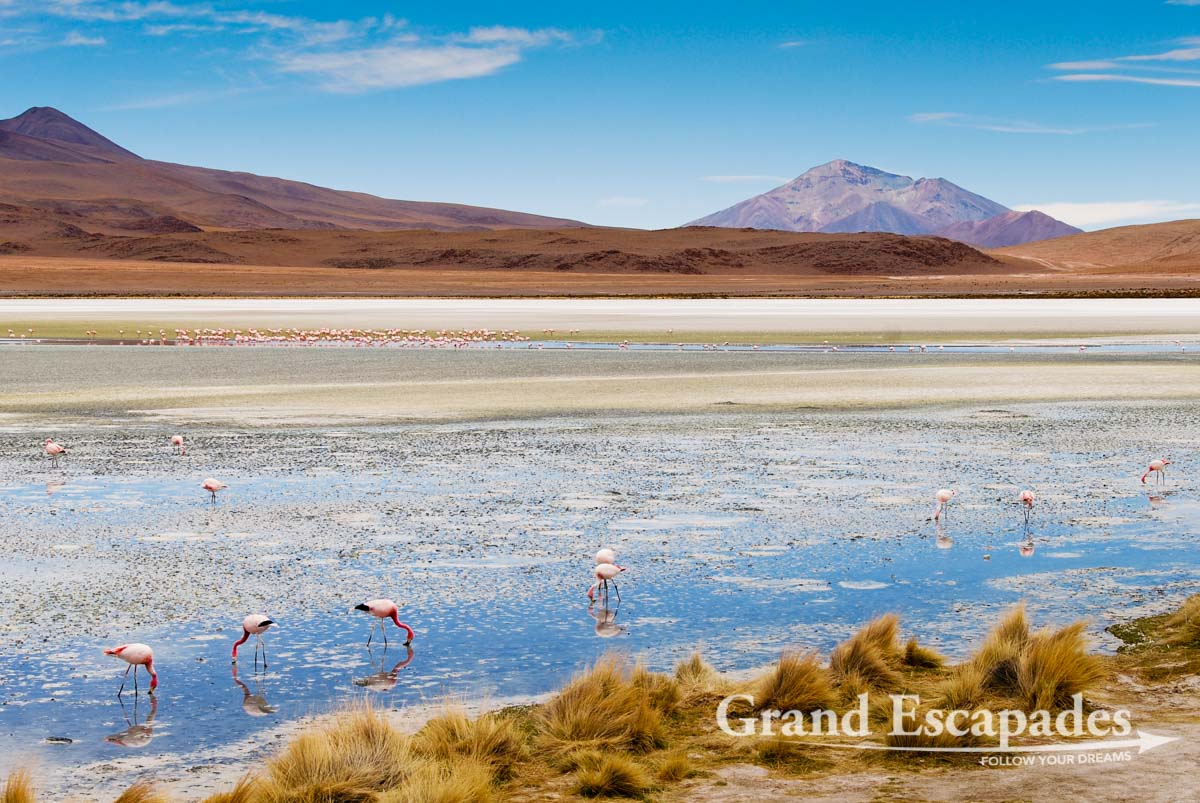
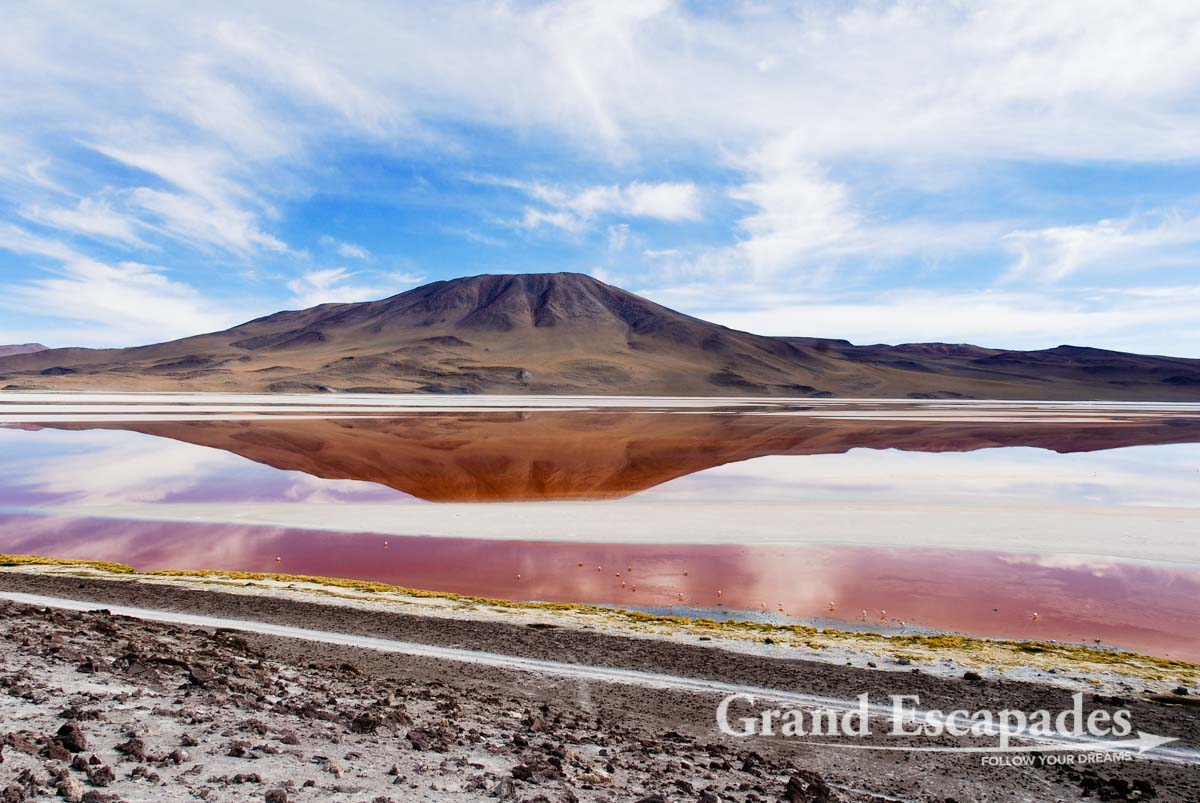
The so-called “Salar de Uyuni” tour actually covers a much larger area than the Salar de Uyuni itself … On a four day tour, we only spent half a day in the Salar de Uyuni, the biggest salt lake in the world. Truly, this is the highlight of the tour. But nevertheless, the other 3.5 days took us through absolutely amazing sceneries. To start the tour from Tupiza rather than Uyuni was an excellent choice. Tupiza is a nice city with beautiful surroundings whereas I found Uyuni simply depressing. Moreover, while traveling through the...[more]

Category: Bolivia

17.11.2007

Gilles - So many technical problems …

It had to be bad luck! For so many technical problems in only four days, there can be no other reason. True, driving conditions are terrible on the Southwest Circuit: the worst bumpy dust roads ever and salt simply eats up cars.In four days we drove no less then 35 to 37 hours. Our jeep was in a very good state when we left. For that, Tupiza Tours has a very good reputation, which in my opinion they deserve, no matter what happened. On the first day, we had a flat tire … Well, this can happen! At night, Don Gerardo, our driver and...[more]

Category: Bolivia

18.11.2007

Heidi - The Salar de Uyuni

The Salar de Uyuni or salt flats near the small town of Uyuni are surely one of the highlights when visiting Bolivia, if not South America. At 3.653 meters, with a surface of 12.106 square kilometers, this is the largest salt lake in the world. It covers as much as half of Switzerland! It is 40 meters deep in its centers and the most fascinating fact is that this salt lake grows every year: 2 to 3 centimeters in depth and also in surface. It is not only the biggest reserve of salt in the world, but of many other minerals. For...[more]

Category: Bolivia

20.11.2007

Gilles - On the tracks of Butch Cassidy & the Sundance Kid

“Kid, the next time I say let’s go to someplace like Bolivia, let’s go to someplace like Bolivia”, Paul Newman to Robert Redford in the film Butch Cassidy & the Sundance Kid. There starts a legend! The outlaws Robert LeRoy Parker and Harry Alonzo Longabaugh, better known as Butch Cassidy & the Sundance Kid, came to southern Bolivia in August 1908 and started robbing banks there. But they soon learned of a far more interesting target: the payroll of a mine-company, 480.000 USD, was to be transported by mule from Tupiza to Quechisla,...[more]

Category: Bolivia

22.11.2007

Potosi, the highest city in the world

After 10 days traveling on our own, Heidi studying Spanish in Sucre and Gilles discovering the South of Bolivia, we met as planed on Wednesday, November 21st in Potosí, the highest city in the world at 4.070 meters. Given the altitude, Potosí was rather cold, with daily heavy rain since the rainy season had just begun. On top of that breathing becomes difficult especially when walking uphill ... We chose for the first night a strongly recommended hotel in the Lonely Planet, the Hotel de Las Tres Portadas, because it was described as...[more]

Category: Bolivia

23.11.2007

Working in hell - Life in the mines of Potosi (Part 1)

Already in 1545 the Spanish were aware of the enormous wealth inside of Cerro Rico and forced thousands of Indigenous to work in the mines extracting the huge deposits of silver. To increase production, the “Ley de Mita” was passed that forced Indigenous and later African slaves to work 16 hour shifts. They were kept underground for 4 months. The working conditions were beyond description and an estimated 8 to 10 million of the forced labor died over the three century of Spanish rule! Silver made Potosi rich and its population grew...[more]

Category: Bolivia

23.11.2007

Working in hell - Life in the mines of Potosi (Part 2)

Such a tour starts off a the miners market where we bought coca leaves, dynamite, 96% alcohol and soft drinks, the latter being the favorite gift considering the hard work in this temperature. Coca leaves serve as calorie intake and keep the miners from feeling tired and hungry. The alcohol is used as an offering to Pachamama and the Tio, but of course is also consumed, especially on Friday. Every mine has a Tio, a devilish-looking creature that has to be kept content by offering coca leaves, alcohol, cigarettes. Otherwise he would...[more]

Category: Bolivia

24.11.2007

Bolivia - Budget

Bolivia is a cheap country, surely the cheapest we have ever been. But instead of saving, we rather decided to significantly upgrade our standard of living for the time we spent there: we chose more comfortable hotels, always with heating on the Altiplano and with a much higher level of comfort; we did not bother to cook and hardly ever frequented cheap food stalls but more often pleasant, even at times fancy restaurants; we booked many tours and chose the more expensive ones to optimize our comfort and experience; … Even with that,...[more]

Category: Bolivia, Budget

26.11.2007

Bolivia - Summary

We simply fell in love with Bolivia … We planned to stay four weeks and spent almost seven there, which forced us to completely change the route for the rest of the trip! What did we like so much in Bolivia? (x) The immense diversity you find in a relatively small area (well, only twice as big as France): deserts, cold, wind-swept Altiplano, a hot and humid rainforest, Mediterranean-like cities, wine growing Tarija … The landscape is simply breathtaking! (x) It is surely the country in South America with the strongest and most...[more]

Category: Bolivia, Summaries